4–2–1 hourly estimate

Maintenance Fluids Calculator

Estimate an hourly maintenance-fluid rate using the weight-based 4–2–1 rule.

Body weight

Enter weight and unit

4–2–1 rule
Calculated reference amounts

Weight-based fluid estimates

The fluid estimates will appear here

Enter a positive body weight and select kilograms or pounds.

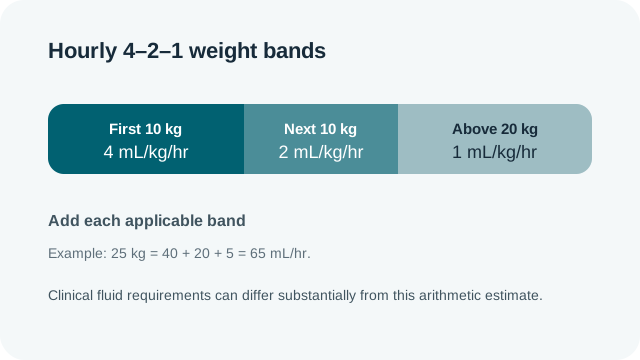
The 4–2–1 maintenance fluid rule divided into three weight bands
Each weight band contributes a different number of millilitres per kilogram per hour.

What is Maintenance Fluids?

The Maintenance fluids calculator is built for showing the weight-based 4–2–1 hourly maintenance estimate and related arithmetic. It gives a transparent numerical result from the values on the form, so you can follow the arithmetic rather than treating the answer as a black box.

It is most useful for reviewing the arithmetic of a commonly taught maintenance rule. Enter values from the same measurement, record or scenario. A polished answer cannot repair an input copied with the wrong unit, date or accounting meaning.

This educational estimate does not determine treatment. Age, illness, kidney or heart function, losses, medications and monitoring can change fluid needs; a bolus is a clinical decision.

How to Use This Calculator

  1. Read each label and enter the requested values. Keep the units and definitions shown beside the fields.
  2. Check that the entries describe one consistent case. Dates should be in order, money values should share a currency, and measured values should come from the same observation.
  3. Select Calculate, then read the main result together with any supporting figures.
  4. Repeat with one changed input if you want to understand sensitivity. Save the inputs with the answer when the number will be discussed later.

The page rejects missing, nonnumeric or impossible values where the calculation has a clear mathematical boundary. Browser number fields help, but the final check happens when the form is submitted.

Formula Used

first 10 kg: 4 mL/kg/h; next 10 kg: 2 mL/kg/h; above 20 kg: 1 mL/kg/h

The displayed result follows this relationship using unrounded input values. Rounding happens for presentation, so working backward from a rounded answer can produce a small difference. The formula describes the calculation on this page; it does not add adjustments that are absent from the form.

Variables Explained

TermMeaning on this page
weightbody mass converted to kilograms
maintenance ratehourly 4–2–1 estimate
1.5 ratemaintenance multiplied by 1.5
bolus figure20 mL per kg arithmetic shown separately

Worked Example

At 25 kg: 10 × 4 + 10 × 2 + 5 × 1 = 65 mL/h. The page also shows 97.5 mL/h at 1.5 times and 500 mL for 20 mL/kg.

The result shown for this example is 65 mL/h. A useful check is to substitute that value back into the relationship or estimate the order of magnitude before relying on the output.

Why Use This Calculator?

Read the result in the unit or percentage printed beside it. Keep the original inputs nearby, because the number has little meaning once its denominator, date, unit or measurement conditions are forgotten.

This educational estimate does not determine treatment. Age, illness, kidney or heart function, losses, medications and monitoring can change fluid needs; a bolus is a clinical decision.

For planning, try a realistic low and high input instead of presenting one result as certain. That range reveals which assumption changes the answer most and makes the estimate easier for another person to review.

Match the number of decimal places to the source data. Extra digits can be useful during intermediate arithmetic, but they do not make a rough measurement or assumption more precise. Round only after the calculation when reproducing the example.

When comparing this result with a report, quotation or another website, check the exact definition first. Two figures with similar names may use different inputs, caps, standards or time periods. Prefer the definition required by the decision you are making.

This calculator is a checking and learning aid. Preserve the source record and use the appropriate professional, laboratory, lender, supplier or published standard when the result affects health, money, safety or a contract.

Common Mistakes

  • Typing a value with a different unit from the one selected or printed.
  • Mixing values from different dates, products, records or accounting periods.
  • Rounding inputs before the calculation and compounding the error.
  • Reading 65 mL/h without keeping the assumptions that produced it.
  • Applying the answer outside the limits of this formula: This educational estimate does not determine treatment. Age, illness, kidney or heart function, losses, medications and monitoring can change fluid needs; a bolus is a clinical decision.

Frequently Asked Questions

What does the Maintenance fluids calculator calculate?

It is designed for showing the weight-based 4–2–1 hourly maintenance estimate and related arithmetic. It reports the result using the relationship and units printed on the page.

How should I enter decimal values?

For Maintenance fluids, use a period as the decimal separator and leave unit symbols outside numeric fields. Keep more input detail than you plan to show in the answer.

Why did the form reject my value?

The Maintenance fluids form rejects a missing, nonnumeric or out-of-range value. Remember this limit: This educational estimate does not determine treatment. Age, illness, kidney or heart function, losses, medications and monitoring can change fluid needs; a bolus is a clinical decision.

Can I use a rounded input?

You can, although the Maintenance fluids result inherits that rounding. Use the original value when available and round the final figure to sensible precision.

How can I check the result?

Work through the example and then apply the same steps to your values. The governing relationship is: first 10 kg: 4 mL/kg/h; next 10 kg: 2 mL/kg/h; above 20 kg: 1 mL/kg/h.

Why can another source show a different answer?

Another Maintenance fluids source may use a different definition, standard, factor or rounding rule. Compare its method and inputs before comparing final numbers.

Should I make a decision from this result alone?

Use it as an arithmetic aid for reviewing the arithmetic of a commonly taught maintenance rule. Check the relevant original records and obtain qualified advice when the decision has medical, financial, safety or contractual consequences.

Sources & References