Strength estimate

One-Rep Max Calculator

Estimate a one-repetition maximum and percentage-based training loads from a submaximal set.

Lift details

Enter weight and repetitions

1RM
Strength summary

Estimated loads

Your estimated 1RM will appear here

Use a technically sound set of 1–20 repetitions.

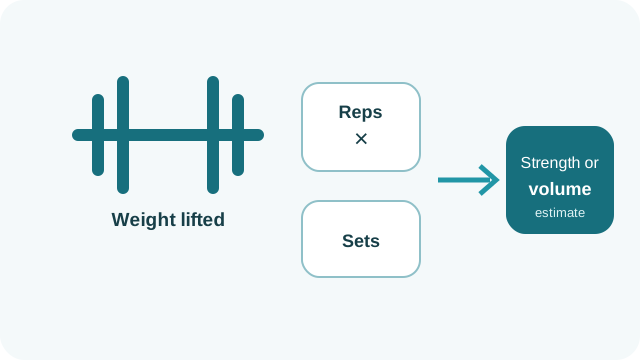
Barbell set leading to an estimated one-repetition maximum and percentage loads
A lower-repetition set generally gives a more useful 1RM estimate than a high-repetition set.
1

What is 1rm Calculator?

A one-repetition maximum, usually shortened to 1RM, is the greatest load someone can lift once in a particular exercise. This calculator estimates that load from a set with more repetitions. It also shows percentages of the estimate, which makes it easier to compare working weights without repeatedly doing the same arithmetic.

The result belongs to the exercise and conditions used for the input set. An estimate from a paused bench press is not automatically an estimate for a touch-and-go bench press, and a machine movement cannot establish your barbell maximum. Treat the number as a training reference rather than a weight you have been cleared to attempt.

2

How to Use This Calculator

fefwefwef
3

Formula Used

fdedfef
4

Variables Explained

InputUnit or choiceMeaning
Weightkg or lbLoad lifted in one set; pounds are converted to kilograms.
Number of Reps1–20 repetitionsCompleted repetitions in that set.

Weight is the load used for the completed set, not a hoped-for maximum. Repetitions are the completed repetitions in that single set, not the total across several sets. Entering three sets of five as fifteen repetitions describes a different performance and exaggerates the estimate.

The formula is a Brzycki-style prediction equation. Its denominator decreases as repetitions increase, so the estimated maximum rises for the same weight. It is not the Epley equation, which uses a different relationship. Small differences between apps can come from the equation, conversion factor or rounding rather than an input mistake.

5

Worked Example

Suppose you lift 80 kg for five repetitions. The denominator is 1.0278 − (0.0278 × 5) = 0.8888. Dividing 80 by 0.8888 gives approximately 90.009 kg, displayed as 90.01 kg. The 90% figure is approximately 81.01 kg and the 80% figure is approximately 72.01 kg.

For a second check, enter 80 kg and one repetition. The denominator is exactly 1 with these coefficients, so the estimate is 80 kg. This is a useful way to check that the load was entered in the intended unit. Entering 176.37 pounds instead of 80 kg gives almost the same answer after conversion, with a small difference from input rounding.

6

Why Use This Calculator?

A rising estimate can help describe progress when you keep the exercise, technique and testing conditions similar. Record the original weight and repetitions alongside the prediction. That allows you to distinguish a genuine change in performance from a change in the way you estimated it.

The percentage rows are arithmetic targets, not a complete training program. Available plates may not allow the exact displayed load. Fatigue, previous sets and the purpose of the session still matter when choosing a practical weight. Rounding 72.01 kg to a load you can assemble does not make the underlying prediction more certain.

7

Common Mistakes

Avoid using a high-repetition estimate as proof of a safe maximum. This page accepts up to twenty repetitions, but acceptance by the form does not guarantee equal prediction quality throughout that range. Avoid comparing a fresh low-repetition set with a tired high-repetition set as though only strength changed. Check the output unit before loading a bar, especially after entering pounds.

8

Frequently Asked Questions

What does 1RM mean?

1RM stands for one-repetition maximum. It refers to the maximum weight a person can lift for one complete repetition of a particular exercise.

How is one-rep max estimated?

A 1RM calculator uses the weight lifted and the number of repetitions completed in a formula to estimate the maximum weight for one repetition. The exact result depends on the equation used.

Is an estimated 1RM accurate?

An estimated 1RM can be useful for training, but it is not exact. Accuracy depends on the formula, exercise, repetition count, technique, and individual characteristics.

Can I use this calculator for different exercises?

You can use a 1RM calculator for many resistance exercises, but estimates may differ in reliability across exercises. Use consistent technique and exercise conditions when comparing results.

Should I attempt my estimated maximum weight?

Not necessarily. The result is an estimate, not a safety guarantee. If testing a true maximum, use appropriate preparation, safe equipment, proper technique, and qualified supervision when appropriate.

9

Sources & References

frefrf