Adult weight screening

Overweight Calculator — Adult BMI

Calculate adult body mass index from height and weight and show the standard screening category used by this page.

Body measurements

Enter height and weight

BMI
Screening summary

BMI result

Your BMI will appear here

This adult calculation does not use age- and sex-specific child percentiles.

Height and weight measurements used to calculate adult body mass index
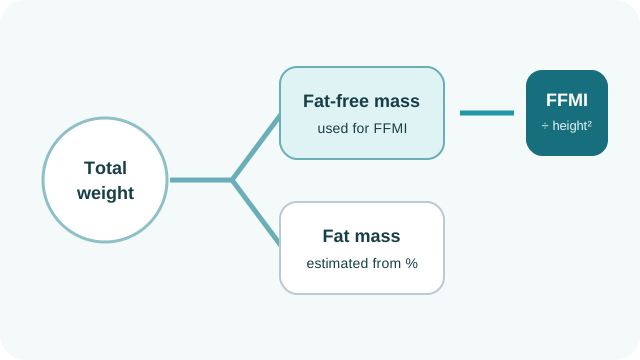
BMI relates weight to squared height but does not distinguish fat mass from muscle or bone.

What is Overweight?

The Overweight Calculator finds body mass index, usually shortened to BMI, from an adult’s weight and height. It then places the number in an adult screening category. This gives a quick, familiar way to compare body size across people of different heights.

BMI is a screening measure rather than a direct measurement of body fat or a diagnosis. Muscle, bone, age, pregnancy, body composition and fat distribution can all affect what the number means. Use the result as one piece of information and discuss personal health concerns with a qualified healthcare professional.

How to Use This Calculator

  1. Enter a current weight and select grams, kilograms, pounds or ounces. Use a measured value when possible rather than an old estimate.
  2. Enter height and choose feet, inches, centimetres or metres. The height field accepts one unit, so 5 feet 9 inches should be entered as 5.75 feet or 69 inches.
  3. Select Calculate. The page converts both measurements to kilograms and metres, divides weight by height squared, and displays the BMI and adult category.

Formula Used

BMI = weight in kilograms ÷ (height in metres)2

For pounds and inches, the equivalent relationship is BMI = 703 × weight in pounds ÷ height in inches squared. This page performs the unit conversions before calculating.

Variables Explained

TermMeaning on this page
WeightBody mass entered in the selected unit. The page converts it to kilograms.
HeightStanding height entered in one selected unit. The page converts it to metres.
BMIWeight relative to squared height, expressed in kg/m².
Adult categoryUnder 18.5 is underweight; 18.5 to under 25 is healthy weight; 25 to under 30 is overweight; 30 or above is obesity in the categories used here.

Worked Example

Suppose an adult weighs 80 kg and is 1.75 m tall. Squaring the height gives 1.75 × 1.75 = 3.0625 m².

BMI = 80 ÷ 3.0625 = 26.12 kg/m² after rounding. The page labels this result overweight because it is at least 25 and below 30.

As a unit check, entering about 176.37 pounds and 68.90 inches should give nearly the same result. Small differences can come from converted and rounded inputs.

Why Use This Calculator?

For adults aged 20 and older, a result from 25 to under 30 falls in the overweight screening category used by CDC. The category describes the BMI value; it does not by itself establish how much body fat a person has or whether that person has a health condition.

A clinician may consider waist circumference, medical history, physical findings, laboratory results, fitness and other factors. People with substantial muscle can have a higher BMI without having the same body composition as someone with less lean mass. Children and teenagers require age- and sex-specific percentiles, so this adult category output should not be used for them.

Track measurements taken under similar conditions if you are following change over time. A single reading can shift with clothing, hydration and scale accuracy. Seek professional advice for unexplained weight change, concerns about nutrition, pregnancy, or decisions about treatment.

When comparing results, keep the measurement method consistent. A home scale on a hard floor and a height measured without shoes are more useful than values collected under changing conditions. Record the date and the units so that a later comparison does not depend on memory.
Common Mistakes

  • Entering 175 as centimetres while leaving metres selected makes the calculated BMI far too small.
  • Entering feet and leftover inches as a decimal without converting the inches is inaccurate; 5 feet 9 inches is 5.75 feet, not 5.9 feet.
  • Treating the category as a diagnosis ignores body composition and other health information.
  • Using adult cutoffs for a child or teenager gives the wrong interpretation.

Frequently Asked Questions

Is this calculator intended for children?

No. The displayed categories are adult categories. BMI for children and teenagers is interpreted with age- and sex-specific percentiles, so use a pediatric growth assessment and speak with a healthcare professional.

Does an overweight BMI prove that I have excess body fat?

No. BMI cannot separate fat from muscle and bone, and it does not show where fat is stored. It is a screening value that should be read with other health information.

Why did my result change after I switched units?

Equivalent measurements should give nearly identical results. Check that you converted a mixed height correctly and did not enter centimetres as metres or pounds as kilograms.

How often should I calculate BMI?

There is no need to repeat it from day to day for most purposes. If you are following a trend, use comparable measurements and a schedule agreed with your healthcare professional.

Can pregnancy affect the meaning of BMI?

Yes. Body weight changes during pregnancy, and the usual adult category is not a guide to pregnancy weight goals. Ask an obstetric care professional for advice suited to the pregnancy.

Why can a muscular person have a high BMI?

Muscle contributes to body weight, but the formula only uses weight and height. It cannot tell whether the weight comes from muscle, fat, bone or another component.

Should I start a diet from this result alone?

A calculator result is not a personal diet plan. Discuss nutrition, medicines, activity and any health conditions with a qualified professional before making a major change.

Sources & References