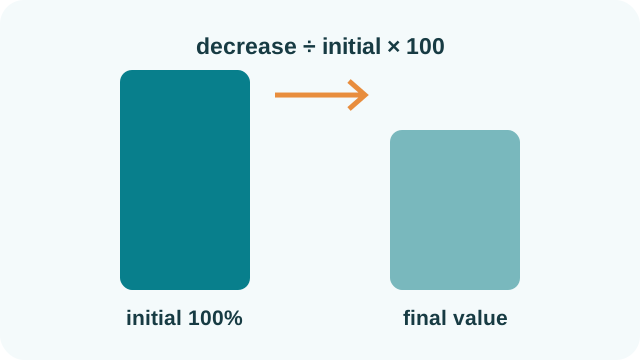
A 0% result means the values are equal. A result between 0% and 100% shows that some of the original amount remains. A 100% decrease means the final value is zero. State the absolute difference alongside the rate when readers need to understand the scale.
Recovering after a decline requires a larger percentage rise because the new baseline is smaller. After a 25% fall from 80 to 60, returning to 80 requires an increase of 20 ÷ 60 × 100 = 33.33%.
Percentage decreases are most useful when the initial and final observations were collected in a comparable way. A lower electricity bill might reflect a price change, lower usage, or a shorter billing period. A smaller defect count could come from improved quality or reduced production. The arithmetic measures the decline but does not identify its cause. For comparisons across groups, consider reporting the underlying counts as well. A fall from four cases to two is 50%, but the change involves only two cases; a fall from 4,000 to 2,000 has the same percentage and a very different practical effect. When the figures are estimates, avoid presenting more decimal places than their accuracy supports.
For price markdowns, the final price may still exclude tax, delivery, or fees. Calculate the decrease using prices on the same basis. A label claiming “save 30%” should compare the reduced price with the stated original price, not with an unrelated market price. Keep a copy of the stated baseline when the comparison may be reviewed later.