The reticulocyte production index adjusts a reticulocyte percentage for the patient’s hematocrit and for an estimated maturation delay during anemia. Reticulocytes are young red blood cells, so the calculation can help a clinician place a reported percentage in context. This page returns both a corrected reticulocyte count and an index. It does not diagnose the cause of anemia, replace an absolute reticulocyte count or determine treatment.
Reticulocyte Production Index Calculator
Calculate corrected reticulocyte percentage and a maturation-adjusted reticulocyte production index.
Blood-count values
RPI
Enter hematocrit and reticulocytes
Laboratory summary
Calculated indices
The corrected values will appear here
Use percentages from the same laboratory context.
Reticulocyte production indexRPI = reticulocyte % × (Hct ÷ normal Hct) ÷ maturation factor
- Reticulocyte production index
- 0
- Corrected reticulocyte count
- 0%
- Maturation factor
- 0
Educational estimate only. It is not medical advice, a diagnosis, or a substitute for assessment by a qualified healthcare professional. Laboratory methods, reference hematocrit, transfusion, and clinical context affect interpretation.
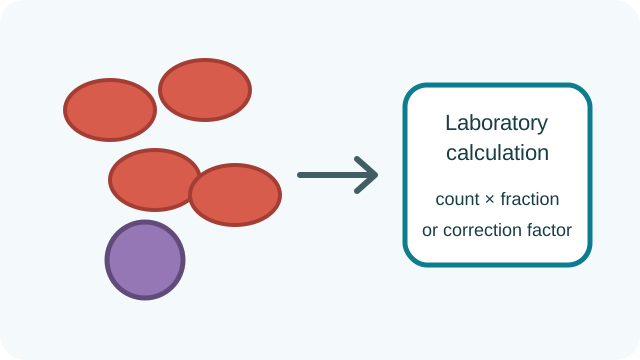
What is Reticulocyte Index?
How to Use This Calculator
- Enter the patient’s hematocrit as a percentage, then enter the reference hematocrit used for comparison. Both must be on the same percentage scale.
- Enter reticulocytes as a percentage of red blood cells, not as an absolute count.
- Select Calculate. The page corrects the reticulocyte percentage by the hematocrit ratio, then divides by a simplified maturation factor: 1.0 at hematocrit 40% or higher, 1.5 from 35% to below 40%, 2.0 from 25% to below 35%, and 2.5 below 25%.
Laboratories and clinical references may use somewhat different reference hematocrits or maturation assumptions. Use the method required by the treating service rather than silently substituting this page’s bands.
Formula Used
Corrected reticulocyte count (%) = reticulocyte % × patient hematocrit ÷ reference hematocrit.
Reticulocyte production index = corrected reticulocyte count ÷ maturation factor.
The index is dimensionless. The correction assumes all entered figures are percentages. If a report supplies an absolute reticulocyte count, it cannot be pasted into the percentage field.
Variables Explained
| Item | Meaning |
|---|---|
| Patient hematocrit | The percentage of blood volume occupied by red blood cells for the patient. |
| Reference hematocrit | The comparison value chosen by the clinician or method, also entered as a percentage. |
| Reticulocytes | Reticulocytes reported as a percentage of circulating red blood cells. |
| Maturation factor | The page’s simplified adjustment for longer circulation of immature cells during anemia. |
| RPI | The corrected reticulocyte percentage divided by that maturation factor. |
Worked Example
For a patient hematocrit of 30%, a reference hematocrit of 45%, and reticulocytes of 6%, the corrected value is 6 × 30 ÷ 45 = 4%. A hematocrit of 30% selects the page’s maturation factor of 2.0, so RPI = 4 ÷ 2 = 2. The result must be considered with the blood count, clinical history, timing and laboratory method.
Why Use This Calculator?
The RPI was designed to distinguish an apparently high reticulocyte percentage caused partly by fewer mature red cells from a stronger marrow response, while also allowing for premature release. A larger index can suggest more reticulocyte production relative to the degree of anemia, and a smaller index can suggest a less robust response. No single cutoff identifies a cause. Recent bleeding, hemolysis, nutrient deficiency, kidney disease, marrow disorders, transfusion and treatment timing can affect interpretation.
MedlinePlus notes that abnormal reticulocyte results can occur in several serious conditions and should be interpreted with other tests. Reference ranges differ among laboratories. Seek prompt medical care for severe shortness of breath, chest pain, fainting or other urgent symptoms. A qualified clinician should interpret the report and decide whether further testing is needed.
The index is especially sensitive to data entry because every input feeds a ratio. Confirm that the hematocrit and reticulocyte result came from the same specimen or clinically appropriate time point, and note any transfusion or treatment between samples. Reticulocyte percentage can look elevated when the number of mature red cells is reduced, which is why the hematocrit correction is used. An absolute reticulocyte count may provide additional information without the same percentage effect, but it remains a laboratory result that needs clinical context. Never delay evaluation of symptoms while trying to refine a hand calculation.
Common Mistakes
- Entering an absolute reticulocyte count where the form asks for a percentage.
- Typing hematocrit as 0.30 instead of 30%, which changes the correction by a factor of one hundred.
- Using a reference hematocrit from a different method without documenting it.
- Calling the corrected percentage an absolute count; they are different measurements.
- Using the index alone to diagnose anemia or choose treatment.
Frequently Asked Questions
Is the RPI the same as a reticulocyte percentage?
No. The index adjusts the reported percentage for hematocrit and a maturation factor, so it answers a different question.
Can I enter an absolute reticulocyte count?
No. This form expects a percentage. An absolute count uses different units and should be interpreted with its laboratory reference range.
Why does normal hematocrit need to be entered?
It supplies the comparison value used to correct the observed reticulocyte percentage for the patient’s reduced red-cell fraction.
How does the page choose maturation factor?
It uses fixed hematocrit bands from 1.0 through 2.5. Other clinical methods may use different assumptions, so confirm the method expected locally.
Does an RPI of 2 diagnose hemolysis?
No. An index cannot establish a diagnosis. Clinicians interpret it with hemoglobin, blood smear findings, history and other laboratory results.
Why can the laboratory interpretation differ?
Laboratories may use different reference ranges, reporting units and methods. Timing after bleeding, transfusion or treatment can also change the result.
When should I discuss the result with a clinician?
Discuss any abnormal blood count with the professional who ordered it. Urgent symptoms such as chest pain, fainting or severe breathing difficulty require prompt care.