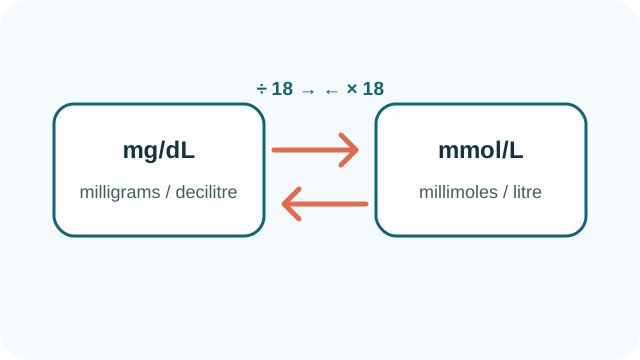
Calculate HOMA-IR and QUICKI estimates from fasting glucose and fasting insulin.
Fasting laboratory values
Enter glucose and insulin
HOMA-IR
Model summary
Calculated insulin-resistance indices
The calculated indices will appear here
Use fasting glucose and insulin results collected in the same laboratory context.
HOMA-IR estimateinsulin × glucose mg/dL ÷ 405
HOMA-IR
0
QUICKI
0
HOMA note
—
QUICKI note
—
Educational estimate only. It is not medical advice, a diagnosis, or a substitute for assessment by a qualified healthcare professional. These model outputs do not establish insulin resistance or diabetes, and cutoffs vary across populations and laboratories.
Glucose is normalized to mg/dL for QUICKI while HOMA-IR uses the matching unit-specific denominator.
The HOMA-IR Calculator helps you calculate the HOMA-IR and QUICKI research estimates from paired fasting glucose and insulin. Both indices summarize fasting laboratory values. They are indirect model estimates, and their interpretation depends on assay, population, clinical setting and whether the sample was truly fasting.
Use it as a transparent arithmetic check. The worked example below follows the same inputs and rounding as the live form, while the notes explain what the result can and cannot support.
2
How to Use This Calculator
Use glucose and insulin measured from the same fasting sample.
Choose mg/dL or mmol/L for glucose. Enter insulin in mU/L, numerically equivalent to µIU/mL for this calculation.
Calculate both indices, then discuss any clinical interpretation with the professional who ordered the tests. Do not apply a universal cutoff from an unrelated study.
Write down the source and date of a real paired fasting laboratory result before entering it. That small habit makes the result reproducible and helps another reader spot a unit or timing mismatch.
Plasma glucose from the paired fasting sample, in the selected unit.
Fasting insulin
Insulin concentration in mU/L (µIU/mL).
HOMA-IR
An approximation derived from a basal glucose-insulin model.
QUICKI
A logarithmic index using the same fasting measurements.
5
Worked Example
With fasting glucose 90 mg/dL and insulin 10 mU/L, HOMA-IR = 10×90/405 = 2.22 after rounding.
QUICKI = 1/[log₁₀(10)+log₁₀(90)] = 1/(1+1.95424) = 0.338. These are calculated estimates, not a diagnosis.
6
Why Use This Calculator?
The values are best read alongside the laboratory report, clinical history and a population-appropriate reference. Published thresholds vary because assays and study groups vary. Acute illness, medicines, fasting duration and sample handling can affect inputs. HOMA-IR is often used for groups in research; a single result does not by itself establish diabetes, insulin resistance or a treatment plan.
Practical use: People usually open this page when they need to calculate the HOMA-IR and QUICKI research estimates from paired fasting glucose and insulin without building a spreadsheet for a single question. Both indices summarize fasting laboratory values. They are indirect model estimates, and their interpretation depends on assay, population, clinical setting and whether the sample was truly fasting. For a real decision, calculate a central case and then change the most uncertain input to a reasonable lower and upper value. Seeing that range is often more informative than treating one rounded answer as permanent.
A useful result should be repeatable: keep the original inputs, unit choices and relevant date beside the HOMA-IR and QUICKI estimates. If a second source uses another convention, reconcile that difference before comparing the numbers.
When sharing the answer, include a short label such as “HOMA-IR and QUICKI estimates from the stated inputs.” That label keeps the number attached to its meaning. It also prevents a reader from mistaking a converted value, model output or planning estimate for a direct observation.
Scope: It cannot diagnose a condition or replace laboratory and clinical assessment.
7
Common Mistakes
Combining glucose and insulin drawn at different times.
Entering mmol/L while leaving the glucose selector at mg/dL.
Using a nonfasting sample without acknowledging that limitation.
Treating one internet cutoff as universal across laboratories and populations.
Do a quick reasonableness check after calculating. A correct-looking decimal can still answer the wrong question when the source paired fasting laboratory result uses a different definition.
8
Frequently Asked Questions
What does the HOMA-IR Calculator calculate?
It is designed to calculate the HOMA-IR and QUICKI research estimates from paired fasting glucose and insulin. The output is a HOMA-IR and QUICKI estimates based only on the values and conventions described on this page.
Which inputs should I check before using this HOMA-IR Calculator?
Check the unit, time period, sign and source definition for every entry. For this page in particular, confirm the meaning of the paired fasting laboratory result rather than copying an unlabeled number from another source.
Why might my result differ from another calculator?
Another tool may use different rounding, units, timing or assumptions. Compare its stated formula with this page’s formula and scope. For HOMA-IR Calculator, even a valid alternative convention can produce a different result without either arithmetic operation being mistyped.
How many decimal places should I keep?
Keep the displayed precision for an ordinary check, but retain source precision when the result feeds another calculation. Do not imply more measurement certainty than the original paired fasting laboratory result provides.
Can I use the result as an official decision?
The result is an educational estimate. It cannot diagnose a condition or replace laboratory and clinical assessment. Use the governing document, qualified professional or official service when a decision has financial, medical, legal or safety consequences.
What is a good way to verify the worked example?
Repeat each substitution in the displayed formula, keep units beside the numbers, and reverse the operation where possible. The example is also checked against the working calculator shown on the HOMA-IR Calculator.
Does changing the unit change the underlying quantity?
A legitimate unit conversion changes the numeral while preserving the quantity. A selector that merely labels currency or a model convention does not fetch outside data; the instructions above identify which behavior applies to this HOMA-IR Calculator.