Educational estimate only. It is not medical advice, a diagnosis, or a substitute for assessment by a qualified healthcare professional. QUICKI is a research-derived model and cannot diagnose insulin resistance or determine treatment.
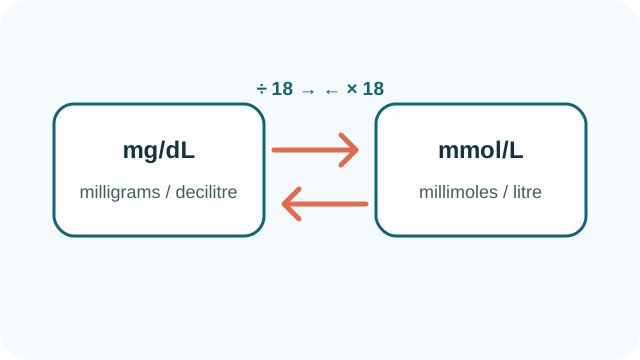
Glucose entered in mmol/L is converted to mg/dL before the logarithmic calculation.
QUICKI, short for Quantitative Insulin Sensitivity Check Index, combines fasting insulin and fasting glucose into a research estimate of insulin sensitivity. It was developed as a simpler substitute for labor-intensive clamp testing in studies. A higher index generally corresponds to greater insulin sensitivity within the population and method being studied.
This result is not a diabetes diagnosis, a treatment target, or a stand-alone health verdict. Insulin assays are not fully interchangeable, and illness, medicines, fasting conditions, pregnancy, and impaired insulin production can affect interpretation. Use laboratory values from the same fasting blood draw and discuss the result with a qualified healthcare professional.
2
How to Use This Calculator
Enter fasting glucose exactly as reported and choose mg/dL or mmol/L.
Enter fasting insulin in µU/mL. The number must be greater than zero because the formula uses a logarithm.
Select Calculate. If glucose is in mmol/L, the calculator multiplies it by 18 before applying the formula.
Review the index alongside the original laboratory results. Confirm that the sample was truly fasting and that the insulin unit matches the form.
Do not substitute a casual home glucose reading for a coordinated fasting glucose and insulin sample. If the laboratory reports insulin in another unit, ask the laboratory or clinician whether it is numerically equivalent before entering it.
Fasting insulin is entered in µU/mL and glucose must be in mg/dL. The page converts mmol/L glucose with mg/dL = mmol/L × 18. Both inputs must be positive; the base-10 logarithm is not defined here for zero or a negative value.
4
Variables Explained
Item
Meaning
Fasting glucose
The glucose concentration from a fasting sample. Select the unit printed on the report.
Fasting insulin
The insulin concentration from the corresponding fasting sample, entered in µU/mL.
log₁₀
The base-10 logarithm used in the published QUICKI equation.
QUICKI
A dimensionless surrogate index. The page displays four decimal places.
5
Worked Example
Suppose fasting glucose is 100 mg/dL and fasting insulin is 10 µU/mL. The logarithms are log₁₀(100) = 2 and log₁₀(10) = 1. Their sum is 3, so QUICKI = 1 ÷ 3 = 0.3333 after rounding.
If the same glucose were written as about 5.56 mmol/L, the conversion would return it to roughly 100 mg/dL before calculation. Small differences can appear because the page uses a factor of 18 and rounds only the displayed result.
6
Why Use This Calculator?
QUICKI has a positive relationship with insulin sensitivity, but one universal cutoff is not appropriate for every patient, assay, or research setting. The original study compared this index with clamp-derived sensitivity in selected groups. Later reviews describe it as a useful surrogate, particularly in population and clinical research, while also explaining limits in people with fasting hyperglycemia and impaired insulin secretion.
A clinician can judge whether the underlying samples, units, medicines, symptoms, and clinical question make this calculation useful. Glucose tests such as fasting plasma glucose, an oral glucose tolerance test, or HbA1c have their own recognized roles in diagnosing diabetes. Do not change food, exercise, or medicine based only on this page.
7
Common Mistakes
Entering mmol/L glucose while leaving mg/dL selected, which changes the logarithm and the index.
Using insulin and glucose from different dates or from a sample that was not collected under the requested fasting conditions.
Entering insulin in an unlisted unit without confirming equivalence.
Reading a rounded index as a diagnosis or treating a published study threshold as universal.
Comparing results from different laboratories without considering differences in insulin assays.
8
Frequently Asked Questions
Can QUICKI diagnose insulin resistance or diabetes?
No. QUICKI is a surrogate estimate used mainly in research and must not replace diagnostic testing or a clinical assessment. A healthcare professional can select and interpret the appropriate tests.
Why must both measurements be fasting?
The published equation was designed around steady-state fasting insulin and glucose. A meal changes both values, so a nonfasting pair does not represent the conditions on which the method was based.
Can I use glucose in mmol/L?
Yes. Select mmol/L and the page converts glucose to mg/dL before taking its logarithm. Do not convert it yourself and then leave mmol/L selected, because that would apply the conversion twice.
Why are zero and negative entries rejected?
The base-10 logarithm used by the equation requires a positive value in this context. A zero or negative laboratory entry also signals that the value or unit needs checking.
Does a higher number always mean better health?
A higher QUICKI generally tracks greater insulin sensitivity in studied groups, but the number has no universal personal target. Health meaning depends on assay methods, the population, and the wider clinical picture.
Can results from two laboratories be compared directly?
Use caution. Insulin measurements may differ between assay systems, and pre-test conditions may differ too. A clinician can decide whether a trend is comparable enough to be meaningful.
What should I do with an unexpected result?
Check the units and fasting status first, then discuss the original laboratory report with a qualified healthcare professional. Seek prompt care for concerning symptoms rather than relying on an online index.