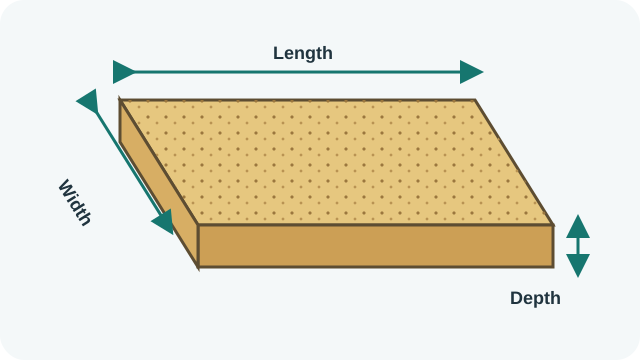
Volume helps when a supplier sells by cubic metre; weight helps when material is sold by tonne or transport has a mass limit. Convert the supplier’s quotation carefully because a tonne is mass, not volume. The link between them is the actual bulk density.
Loose sand may compact after placement, so the delivered loose volume may need to exceed final compacted geometry. Moist sand can weigh more than dry sand for the same bulk volume. Edges, slopes, drainage, base preparation, and local engineering requirements can change quantities. For structural, playground, drainage, or load-sensitive work, follow the design specification and professional advice.
A practical ordering calculation often starts with compacted design volume, then divides or adjusts using the supplier’s stated compaction relationship before applying loose bulk density. There is no single safe percentage for every sand and job. Test data, specifications, and supplier experience should determine the allowance.
Transport capacity may be limited by weight before volume, or vice versa. Compare both the calculated cubic metres and tonnes with truck limits. If several deliveries are needed, round the number of loads upward and confirm access, stockpile space, axle limits, and unloading conditions.
Measure at several locations when depth varies. Using an average depth is reasonable only if the sampling represents high and low areas; a single shallow measurement can materially understate the order. Record those measurements before averaging them.