A round pen calculator estimates the perimeter of a circular enclosure and the number of equal straight panels needed to cover that distance. Enter the desired pen diameter and the usable length of one panel. The page converts both measurements to metres, calculates π times diameter, divides by panel length and rounds the count upward. It is a planning estimate; gates, connectors and the geometry of straight panels can change the finished diameter.
Round Pen Calculator
Estimate the circumference and whole number of equal panels needed for a circular pen.
Pen details
PanelsEnter diameter and panel size
Pen summary
Your estimate
Your panel estimate will appear here
Enter the pen diameter and usable panel length, then calculate the quantity.
Panels requiredRounded up to the next whole panel
- Pen circumference
- 0 m
- Panel count
- 0
- Entered panel length
- 0 m
The estimate does not subtract a gate opening or account for overlap, connector gaps, or panel layout.
What is Round Pen?
How to Use This Calculator
- Enter the intended inside or centerline diameter and select centimetres, inches, metres or feet. Record which measurement convention you use.
- Enter the usable panel length between connection points and select its unit. Do not use a nominal catalogue length if hinges or overlaps reduce the installed span.
- Select Calculate. The page reports circumference in metres to one decimal place and divides the unrounded circumference by panel length. Any fractional panel count is rounded up to a whole panel.
Set aside any gate opening before ordering. If a gate replaces one same-length panel, it may count as one section; if its width differs, subtract the gate opening from the perimeter and estimate the remaining panels separately.
Formula Used
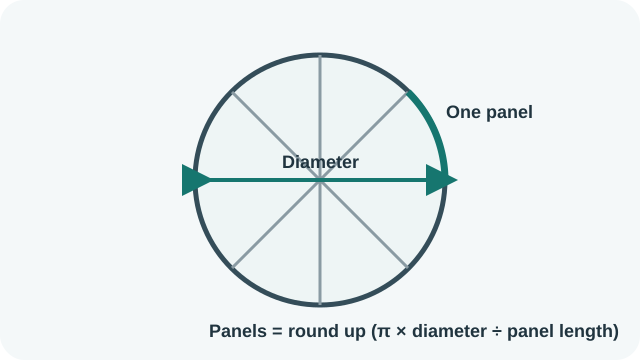
Circumference = π × diameter.
Estimated panel count = ceiling(circumference ÷ usable panel length).
Ceiling means round upward to the next whole number. Both lengths are converted to metres before division. Because straight panels form a polygon rather than a true circle, this circumference method is an approximate purchasing count.
Variables Explained
| Item | Meaning |
|---|---|
| Pen diameter | The target distance across the circular pen through its centre. |
| Panel length | The usable installed span of one straight panel between connections. |
| Circumference | The perimeter of an ideal circle with the entered diameter. |
| Panel count | The circumference estimate divided by panel length and rounded upward. |
Worked Example
For a 15 m diameter pen with 3 m panels, circumference is π × 15 = 47.1239 m, displayed as 47.1 m. Dividing by 3 gives 15.708 panels, so the estimate rounds upward to 16 panels. Sixteen straight 3 m panels provide 48 m of section length. Their actual assembled shape and connection angles determine the final diameter.
Why Use This Calculator?
The whole-number result is a material estimate, not a promise that the selected panels close perfectly at the target diameter. Straight panels create a regular or irregular polygon. Tightening the connections into a smaller pen, leaving connector gaps, adding a gate or laying panels unevenly changes the result. Mark the proposed center and perimeter on the site before purchase when possible.
Oregon State Extension describes round pens as useful for exercise and training and notes that intended use affects suitable size. Site drainage, footing, fence visibility, height, strength and safe hardware also matter. The calculator covers none of those choices. Select products designed for the animals and activity, follow manufacturer instructions and consult experienced local professionals.
If the quotient is already a whole number, no extra panel is added. Otherwise rounding upward provides enough nominal length, but the surplus is distributed around the enclosure rather than cut automatically. Confirm how panels connect and whether a smaller or larger final diameter is acceptable.
Before marking the site, decide whether the stated diameter is measured to the inside face, panel centreline or outside face. Thick panels and posts make those circles different. A centreline convention is convenient for layout, but usable interior space is what often matters for an animal. Stake the centre, measure several radii and check clearance from buildings, trees, utilities and drainage paths. If the available space forces a different diameter, recalculate before ordering. Panel suppliers can confirm actual connected length, compatible gate sections and hardware needed for the chosen arrangement.
Common Mistakes
- Entering radius instead of diameter, which halves the estimated perimeter.
- Mixing feet and metres without selecting the matching unit beside each value.
- Using nominal panel length rather than usable distance between installed connection points.
- Forgetting to plan for a gate, overlap, post width or connector gap.
- Assuming straight panels reproduce the circumference of a perfect circle exactly.
Frequently Asked Questions
Should I enter radius or diameter?
Enter diameter, the full distance across the pen through its centre. Radius is only half that distance.
Why is the panel count rounded upward?
Panels are purchased as whole sections. Rounding down would provide less nominal length than the ideal circumference.
Does a gate count as a panel?
It can if it replaces a section of the same usable width. For a different gate width, account for that opening separately.
Why may the completed diameter differ?
Straight panels form a polygon, and hinges, overlaps and connection angles affect the installed perimeter and distance across it.
Can I mix a diameter in feet with panels in metres?
Yes, provided each unit selector matches its number. The page converts both measurements to metres.
Does the estimate include spare panels?
No. It only rounds the circumference quotient upward. Add any desired spare or special sections separately.
Is this enough to design a safe horse pen?
No. Safe size, height, footing, drainage, visibility, hardware and strength require separate decisions suited to the animals and site.